
Sep . 23, 2025 09:27 Back to list
Tempered Glass: A Modern Glass Model of Resilience and Safety
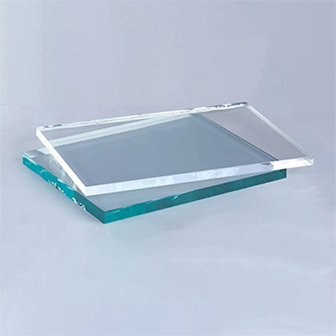
In modern architecture and living scenes, Tempered Glass has become a visible yet indispensable material for people's daily lives due to its unique physical properties and wide applicability. It is not a simple glass product, but a safety glass with improved performance achieved through special processes, demonstrating outstanding value in ensuring safety and expanding application boundaries.
The birth of Tempered Glass originates from a unique physical strengthening process
The production of toughened glass is based on ordinary glass, which is first precision cut, edged, and cleaned to remove surface impurities and stress hazards. The glass is then heated to a high temperature state close to softening (usually 600-700 ℃), and then uniformly blown with high-speed cold air to rapidly cool and shrink the surface of the glass, forming strong compressive stress. The internal tensile stress is maintained due to slow cooling. This balance of internal and external stress endows the glass with extremely high strength.
In terms of performance, Tempered Glass has a qualitative leap compared to ordinary glass
The impact strength of custom tempered glass is 3-5 times that of ordinary glass, and it can withstand larger external impacts without being easily broken. Even if broken, it will split into blunt edged small particles without sharp edges, greatly reducing the risk of injury. This "safe breaking" feature makes it highly favored in scenarios with high safety requirements. At the same time, its heat resistance has been significantly improved, able to withstand temperature differences of over 200 ℃, withstand rupture from sudden cold and heat waves, and adapt to various complex environments.
The application of Tempered Glass has penetrated into various fields of life
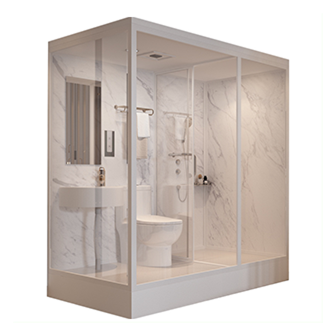
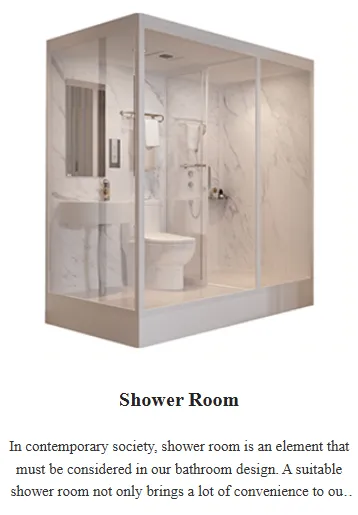
In the field of architecture, toughened laminated glass is a commonly used material for high-rise building curtain walls, sightseeing elevator cars, and glass guardrails, which not only meets the needs of lighting but also ensures structural safety; In the field of transportation, tempered glass is commonly used for car windshields, high-speed train windows, etc. to ensure travel safety; In home settings, Tempered Glass is commonly used for desktops, shower partitions, home appliance panels, etc., balancing aesthetics and durability. In addition, its presence can also be seen in some special scenarios such as protective facilities in laboratories and sports venues.
With the development of technology, Tempered Glass continues to iterate and upgrade
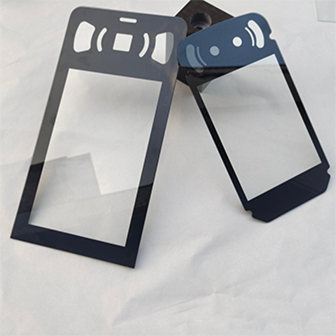
The application of chemical tempering technology further enhances the strength of ultra-thin toughened laminated glass, making it suitable for precision scenarios such as electronic device screens; The maturity of curved tempering technology enables it to present various forms according to design requirements, expanding the possibilities of styling. At the same time, composite Tempered Glass formed by combining with other materials, such as adhesive layers, has both high strength and penetration resistance, making its application scenarios more extensive.
In summary, Tempered Glass has become a highly valuable material in modern society due to its unique strengthening process, excellent safety performance, wide range of applications, and continuous technological breakthroughs. It plays an important role in ensuring safety and improving quality of life, and its development also reflects the continuous exploration of materials science in balancing performance and safety. There is still broad development space in the future.
Tempered Glass FAQs
What is Tempered Glass and what is the difference between it and regular glass?
Tempered Glass is a safety glass made through a special heat treatment process, with a strength 3-5 times that of ordinary glass. Compared with ordinary glass, Tempered Glass forms small granular fragments instead of sharp shards when broken, greatly reducing the risk of harm to the human body. In addition, Tempered Glass also has better temperature resistance and can withstand large temperature changes without easily breaking.
What are the common application scenarios for Tempered Glass?
Tempered Glass is widely used in the fields of architecture, home furnishings, and transportation. In architecture, it is commonly used for glass curtain walls, doors and windows, and balcony guardrails; In home settings, it is commonly used for shower rooms, coffee tables, and tabletops; In the field of transportation, it is used for car side windows and rear windshields. Its high strength and safety make it the preferred material for many high-risk situations.
Can Tempered Glass be cut or drilled?
Once tempered glass is heat-treated, it cannot be cut or drilled again. This is because the tempering process creates strong compressive stress on the surface of the glass, and any mechanical processing will disrupt this stress balance, leading to the overall fragmentation of the glass. Therefore, if customized shape or size is required, cutting and processing must be completed before tempering.
Why does Tempered Glass self destruct and how can it be prevented?
Tempered Glass self explosion is mainly caused by the presence of nickel sulfide impurities or uneven stress distribution inside. Although the incidence is low, it cannot be completely avoided. To reduce risks, Tempered Glass that has undergone homogenization treatment can be chosen. This process induces potential self explosion in advance through high-temperature hot soaking, thereby reducing the probability of self explosion during later use. In addition, it is also important to avoid local stress concentration during installation.
What is the high temperature resistance of Tempered Glass and can it be used for kitchen countertops?
Tempered Glass has excellent high temperature resistance and can typically withstand temperature differences of over 200 ℃, making it suitable for use in kitchen environments. However, it should be noted that direct contact with open flames or prolonged localized high temperatures may still cause rupture. It is recommended to choose high-temperature resistant Tempered Glass designed specifically for stoves, and ensure that its thickness is sufficient (usually 6mm or more), while avoiding the use of sudden cooling and heating.
-
Enhance Your Home Decor with a Stylish Floor Length Mirror with Lights
NewsMar.31,2026
-
Elevate Your Bathroom with a Stylish Bathroom Round Mirror with Light
NewsMar.28,2026
-
Enhance Your Bathroom with the Perfect LED Vanity Mirror Bathroom Lighting
NewsMar.26,2026
-
Choosing the Perfect Illuminated Shaving Mirror For Your Daily Grooming Routine
NewsMar.24,2026
-
Choosing the Perfect Illuminated Dressing Table Mirror for Your Beauty Routine
NewsMar.21,2026
-
Enhance Your Space with a Stylish LED Mirror Black Frame A Comprehensive Guide
NewsMar.19,2026